Jules Dupuit Prize 2026
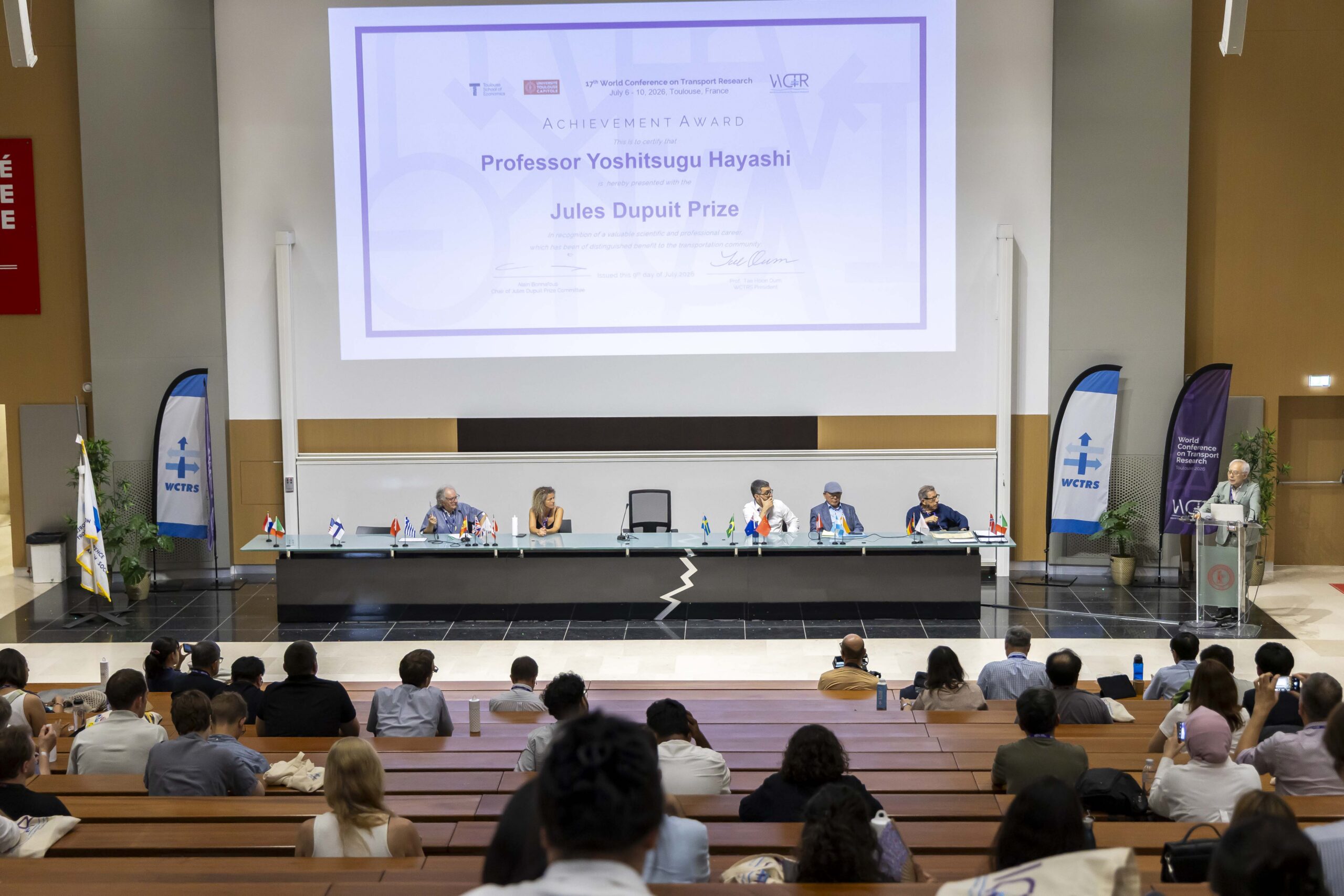
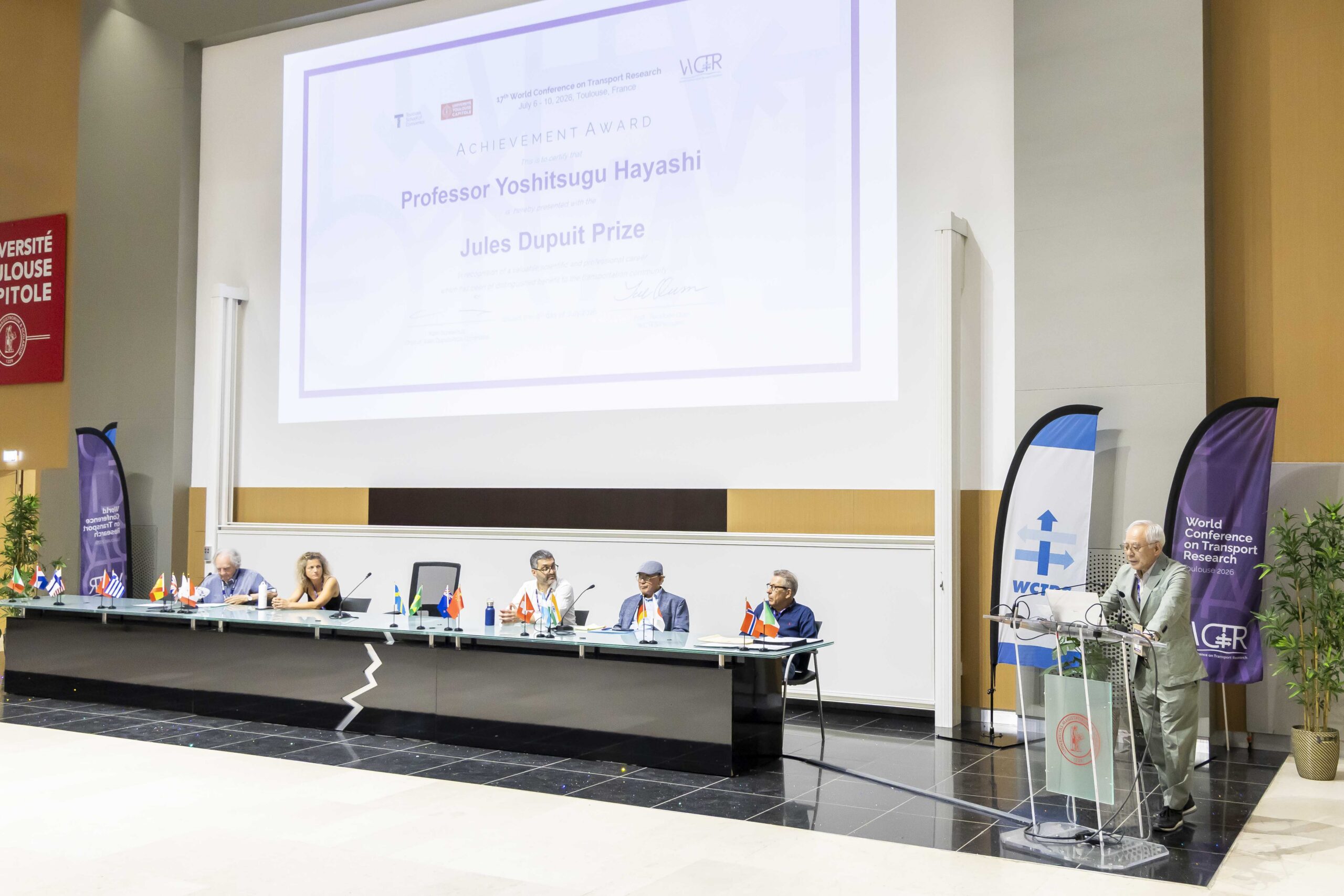
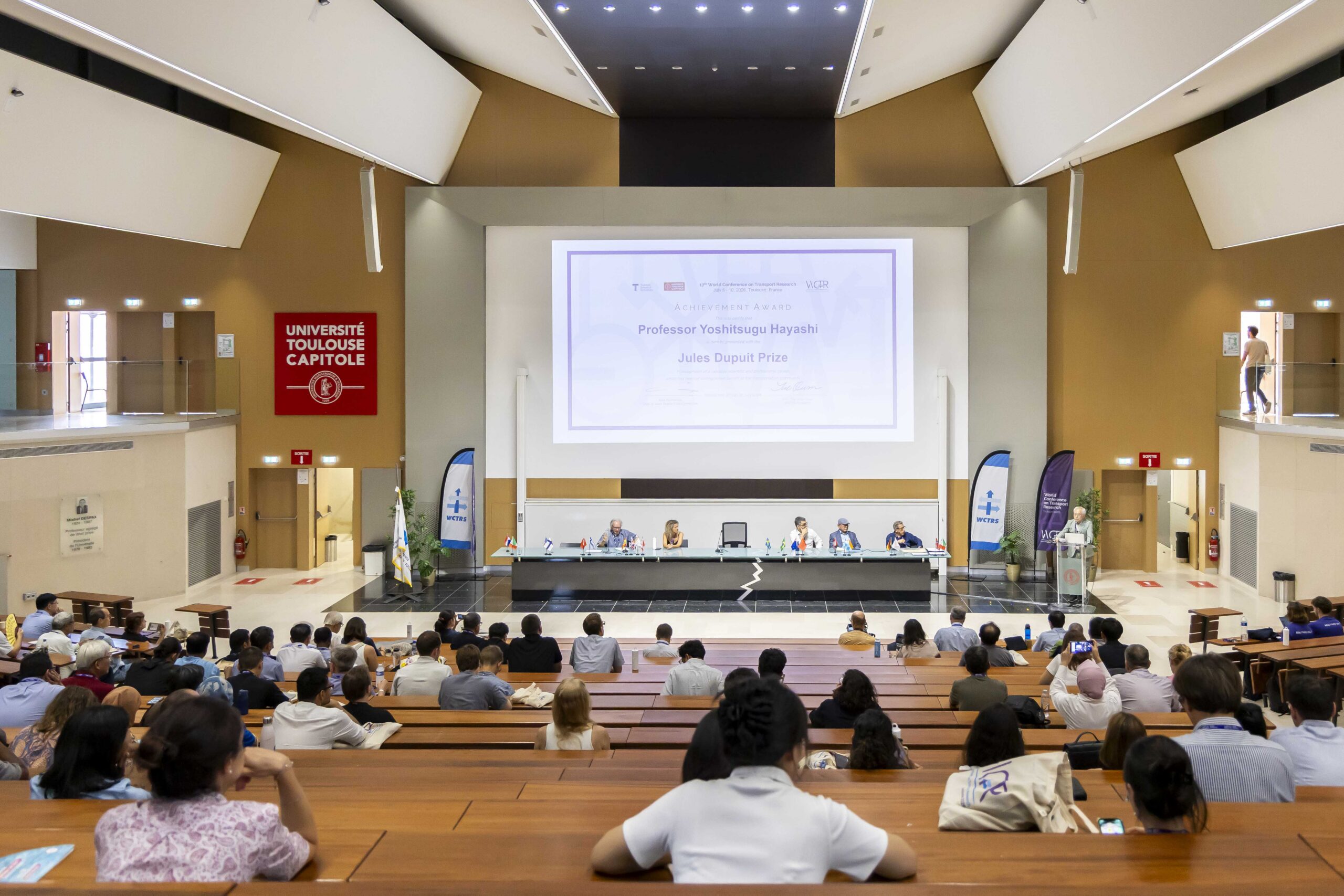
Introduction by Alain Bonnafous (Chairman of Dupuit Prize Sub Committee) at Awarding Ceremony, Toulouse
I would first like to remind you that our colleagues Marc Gaudry (from the University of Montreal) and Antti Talvitie (from the University of Helsinki) initiated the Jules Dupuit Prize at the 1992 Conference in Lyon and persuaded the Finnish Ramboll Group to sponsor it every three years. Today, the prize is sponsored by the WCTRS.
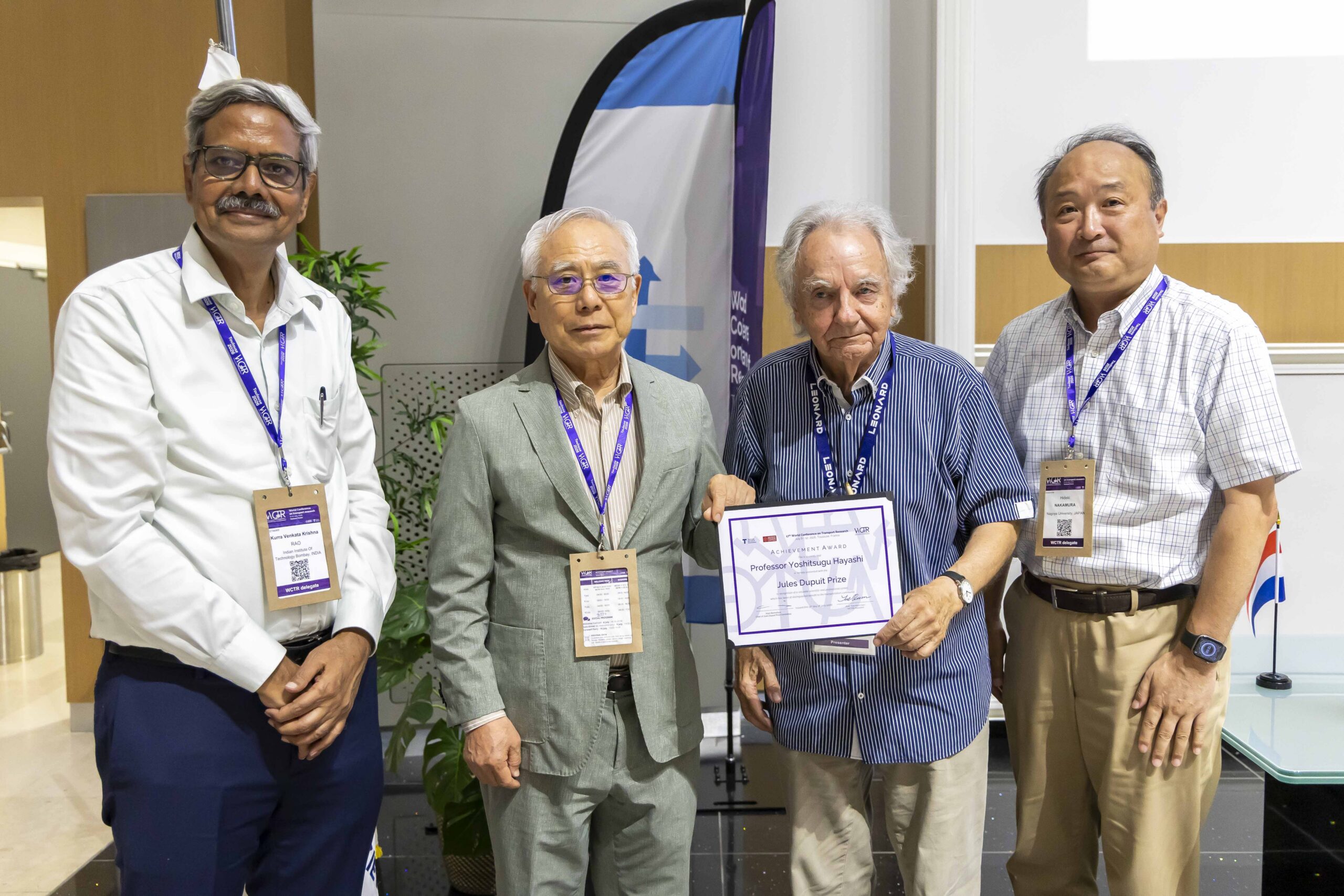
I would like to extend my warmest thanks to Krishna Rao, Professor at the Indian Institute of Technology Bombay, and to Hideki Nakamura, Professor at Nagoya University, for their contribution, which led our Sub-Committee to a unanimous decision despite the very high level of the competitors.
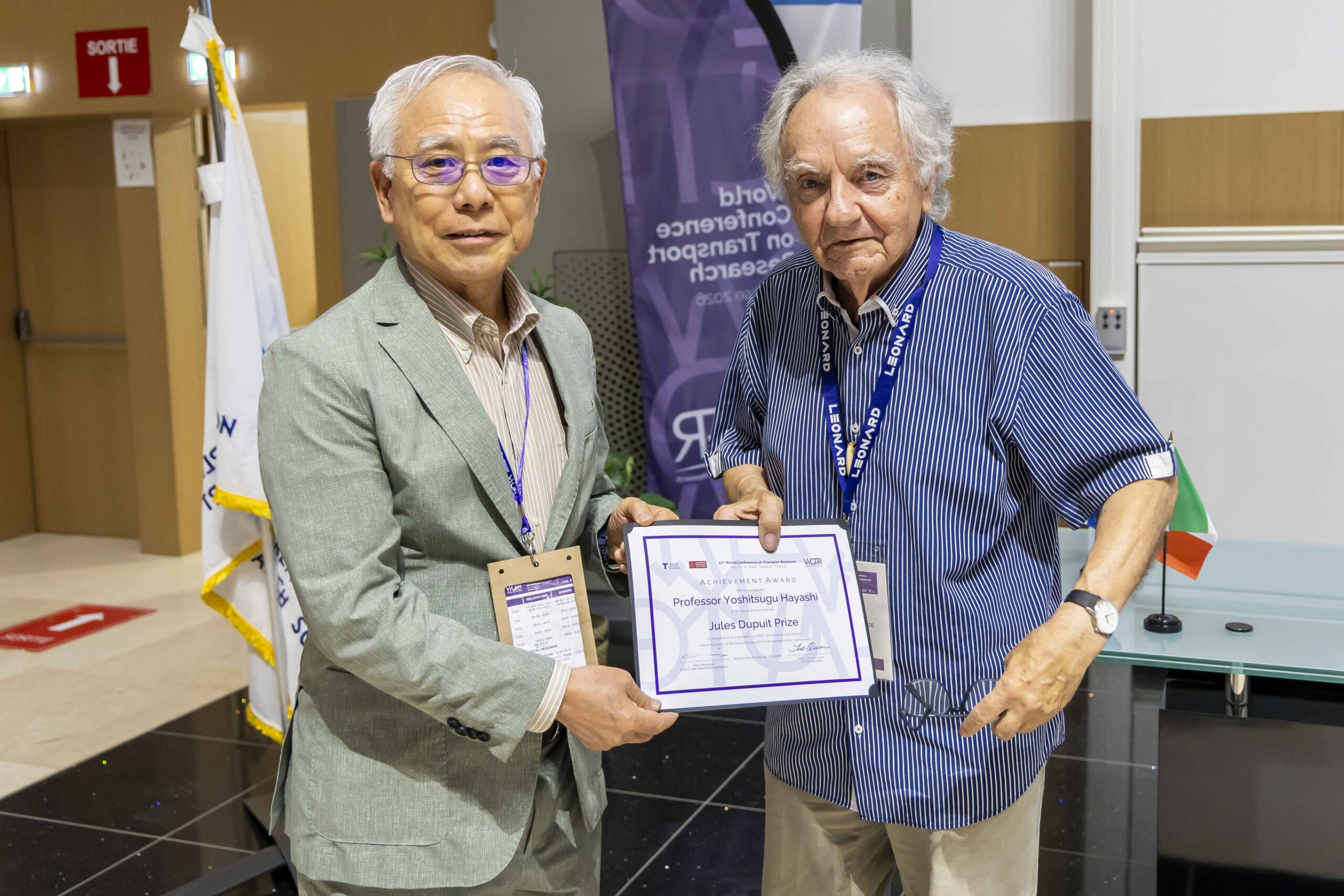
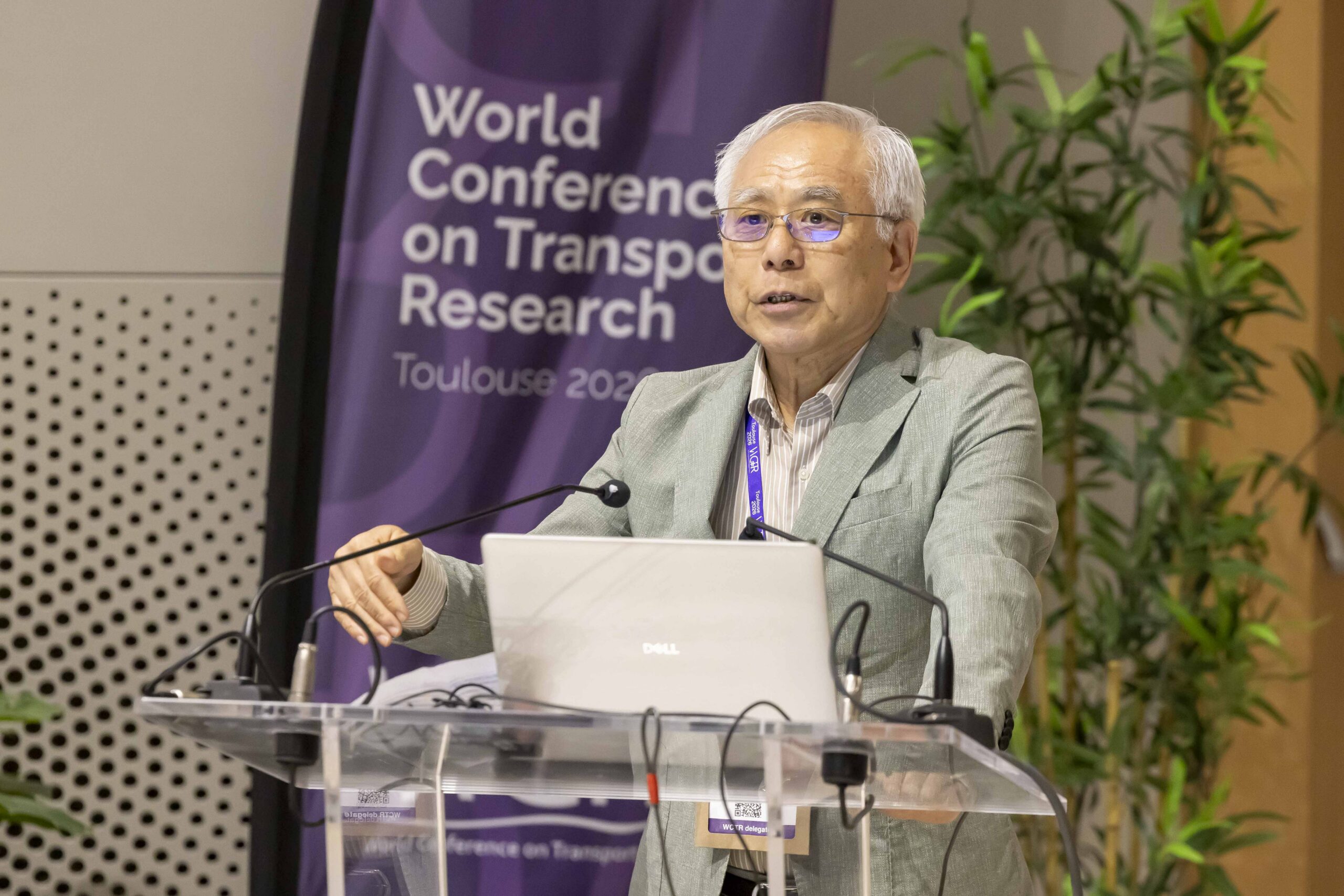
As confirmed by the Steering Committee, the 2026 Jules Dupuit Prize is awarded to Yoshitsugu Hayashi.
Dear Yoshi, I will be very brief in reminding your position regarding the three requirements of this prize.
First requirement: “A record of outstanding scientific work; a significant reputation in transport policy”.
Every researcher knows your contributions once they have addressed the topics of Transport and Land Use, of Value Capture (I am thinking of your seminal paper from 1988), of Sustainable Transport or of Quality of Life.
Second requirement: “A reputation for truly international activity including involvement in global networks”.
Besides your involvement in relations with The World Bank or the ITF, it should be emphasized that you are an Executive Committee Member of the Club of Rome Board (the only one among WCTRS members).
Third requirement: “Particular contributions to and reputation within WCTRS”.
Because you are, Yoshi, the only member of WCTRS taking all the scientific and managerial duties of the Society, it would take too long to list them all. I will simply highlight a lesser-known role: at the first World Conference in Rotterdam in 1977, half a century ago, you were a student attendee.
Congratulations, Yoshi, on this magnificent and long journey, and above all, thank you.
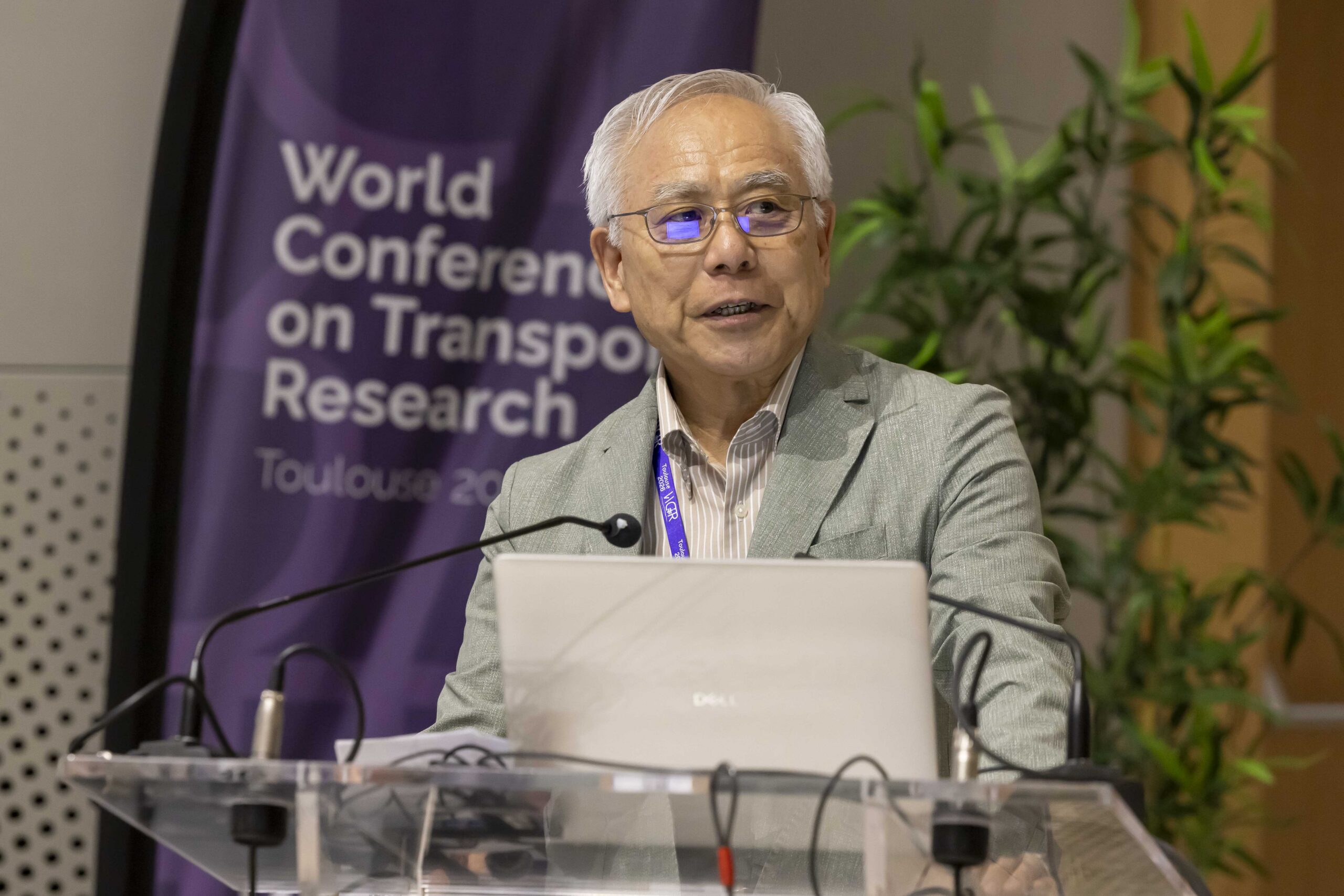
Message from the Laureate of Jules Dupuit Prize Winner – Yoshitsugu Hayashi
My research life began in the mid-1970s, in the laboratory of my mentor, Professor Hideo Nakamura, at the University of Tokyo, where I built a land use–transport model, CALUTAS, to assess the effects of a planned road-rail bridge crossing Tokyo Bay on mitigating Tokyo’s growing population by relocating it to Boso Peninsula on the opposite shore. I joined ISGLUTI (the International Study Group on Land Use – Transport Interaction) as its youngest member, marking my entry into international collaborative research.
My work has focused, first, on modeling the effects of transport infrastructure on land-use change, urban sprawl, and land value increase, as well as on local and global environmental impacts; and second, on the countermeasure policies these effects call for, such as environmental taxation, value capture, and smart-shrink methodologies for compact cities. This work ultimately led me to the QOL Accessibility Model, which reframes the evaluation of transport infrastructure and urban compaction — shifting from an efficiency-based assessment grounded in national and regional GDP growth to a sufficiency-based assessment grounded in individual Quality of Life, one capable of measuring progress toward the SDGs’ principle of “leaving no one behind”.
Besides this academic work, I went on to assess the effects of real-world megaprojects — including the Bay Bridge and the Tsukuba Express in Tokyo, the inauguration of an urban rail network to relieve Bangkok’s notoriously severe traffic congestion, and India’s High Speed Rail linking Mumbai and Ahmedabad, 500 km apart, among others.
Reaching beyond transport research, I have continued to advocate the importance of mitigating emissions from transport at side events of the UNFCCC COP, and, since 2015, as a Full Member and Board Member of the Club of Rome — known for its report “The Limits to Growth” (1972) — through which I pursue human well-being and global sustainability.
WCTRS has been my life. From my first participation as a Ph.D. student at the inaugural Rotterdam conference (1977), through hosting the 5th conference in Yokohama (1989), while being deeply involved in the operational management of the WCTR Society, to the 17th conference in Toulouse (2026) — across the full 49 years of this journey, from the founding era of the society to its evolution into today’s foremost academic forum in the field — WCTRS has continually shown me a dazzling, dreamlike world.
It is with great honor that I now receive the Jules Dupuit Prize, WCTRS’s highest award, and I offer my deepest gratitude to the wonderful colleagues who have walked this path together with WCTRS, and also to the Dupuit Prize Subcommittee.